End of the World: Komodo’s Edge of the Map Dive
There are dive sites in Komodo that feel famous, busy, well-known. And then there is End of the World, a place that feels like it sits just beyond everything else. Remote, exposed, and shaped entirely by open ocean forces, this northern Komodo dive site is where the park starts to feel wilder and less predictable. It’s not a dive you do casually. It’s a dive you commit to. For experienced divers visiting Labuan Bajo, End of the World is often described as one of the most “expedition-like” dives in the region.
The Feeling of Arriving Somewhere Remote
The journey to End of the World already sets the tone. Boats move farther north, past more familiar sites like Castle Rock and Crystal Rock, until the coastline starts to feel more isolated. There’s less traffic, fewer bubbles in the water, and a noticeable sense that you’re leaving the main dive circuit behind.
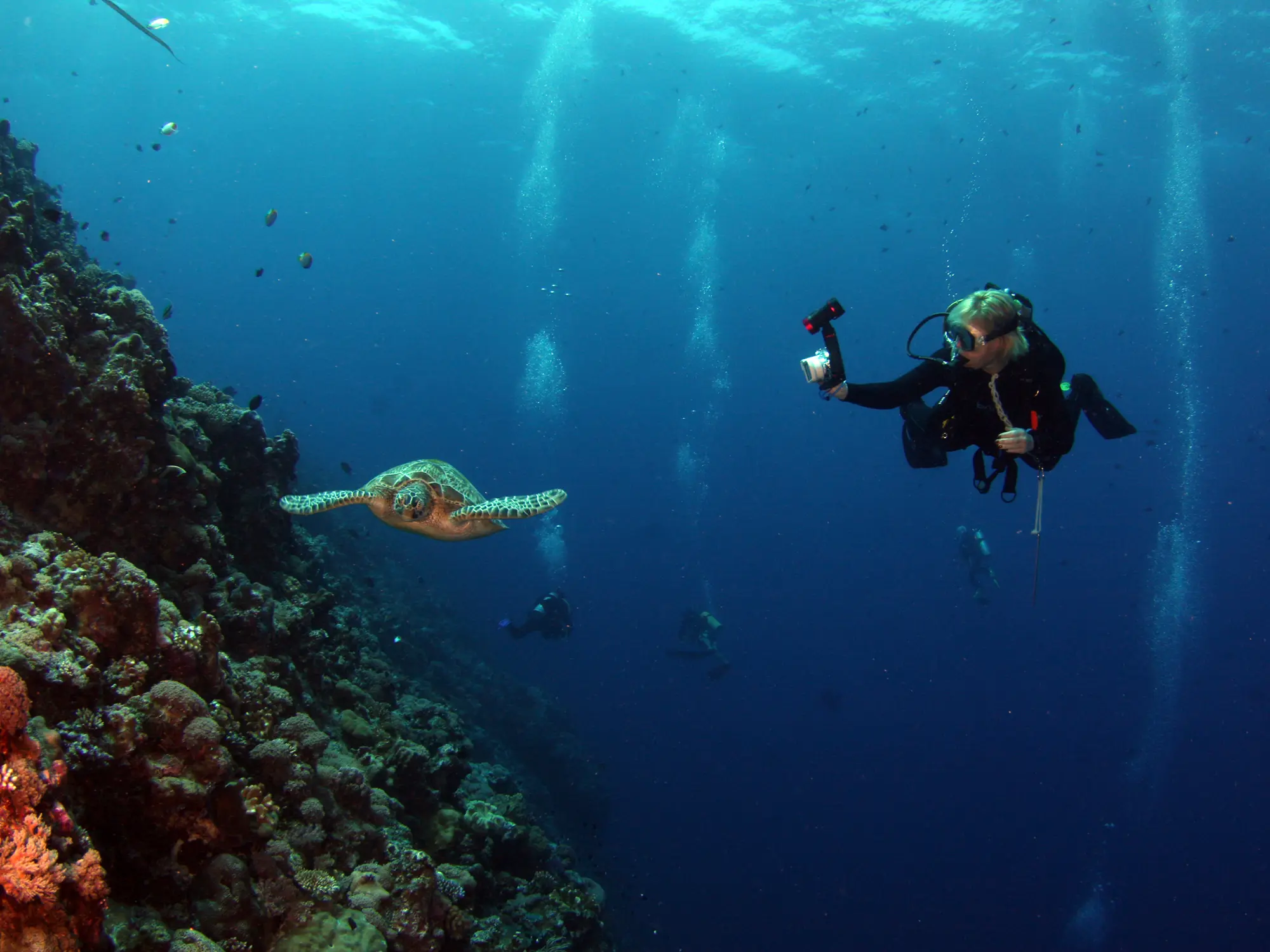
When you finally descend, the environment reflects that feeling immediately. Steep reef edges drop into deep blue water. The current is present from the start. And visibility often stretches into the distance, giving the impression that the ocean simply continues without interruption. This is not a controlled environment. It’s an exposed one.
A Dive Built by Current and Depth
End of the World is defined by movement. Currents sweep along the reef, sometimes steady and directional, other times shifting in intensity without much warning. The dive is typically a drift along steep slopes where reef meets open ocean.
Marine life appears in layers. First the reef fish—fusiliers, anthias, and snapper. Then larger movement in the blue. Sharks, trevallies, and tuna passing through like they’re following invisible routes. The deeper edge of the site always feels like it holds something more. Not necessarily hidden—but distant, like the ocean continues beyond what you’re able to fully see. That sense of scale is what makes this dive different.
Why Experienced Divers Seek It Out
End of the World isn’t about comfort. It’s about exposure. The site feels less structured than central Komodo dives. There are fewer reference points, more open water, and a stronger sense of natural unpredictability. Conditions can change quickly depending on tides and ocean swell from the northern currents.
This is why it’s reserved for divers who are already confident with drift diving and buoyancy control. For those still building experience in Komodo’s current-heavy environment, a diving course in Komodo is often the recommended step before attempting sites like this. Here, control matters—not to resist the ocean, but to move with it safely.
Marine Life at the Edge
Even in its remote setting, End of the World holds strong marine biodiversity. Sharks are commonly seen patrolling the reef edges, while giant trevallies and barracudas move through the current. Tuna and other pelagic species often appear in the blue water, especially when conditions are active.
The reef itself is healthy but rugged—built for exposure rather than calm lagoons. Coral structures are shaped by constant water movement, creating a more raw and natural look compared to sheltered sites. It’s not about density of life here—it’s about movement and scale.
A Site That Depends Entirely on Conditions
End of the World is highly dependent on weather and ocean state. On good days, visibility can be excellent and the current manageable, allowing a long, smooth drift along the reef slope. On more intense days, the site becomes a fast-moving experience where timing and positioning matter significantly.
Because of this, dives here are carefully selected by local operators and only done when conditions align properly. It’s also why many divers experience it through a fun diving trip in Komodo, where itineraries adapt daily to ocean conditions.
The Kind of Dive You Don’t Compare
End of the World is not a dive you rank against others. It sits in a different category entirely. There are no crowds, no predictable rhythm, no “standard” experience. Instead, there’s exposure, distance, and a feeling that you’re diving along the edge of something much larger than the site itself. It’s less about what you see—and more about where you are. A remote point in Komodo where the reef stops feeling familiar and starts feeling infinite.
Access to End of the World usually requires a full-day trip or liveaboard departing from Labuan Bajo. The site sits far enough north that conditions and timing play a major role in whether it’s included in an itinerary. Experienced dive teams choose this site carefully, based on safety, currents, and visibility on the day.
If you’re planning a trip and want to explore remote Komodo dive sites like End of the World with local guidance, you can arrange your experience through Divers Paradise Komodo for dive trips, training, and advanced diving support.
Dive With Us
Got Questions?
Reach Out and Let’s Dive Into Your Next Adventure!
This website is created by Vic Ranci Digital Marketing
© 2024 Divers Paradise Komodo. All rights reserved.