
Crystal Rock: Komodo’s Most Electric Drift Dive
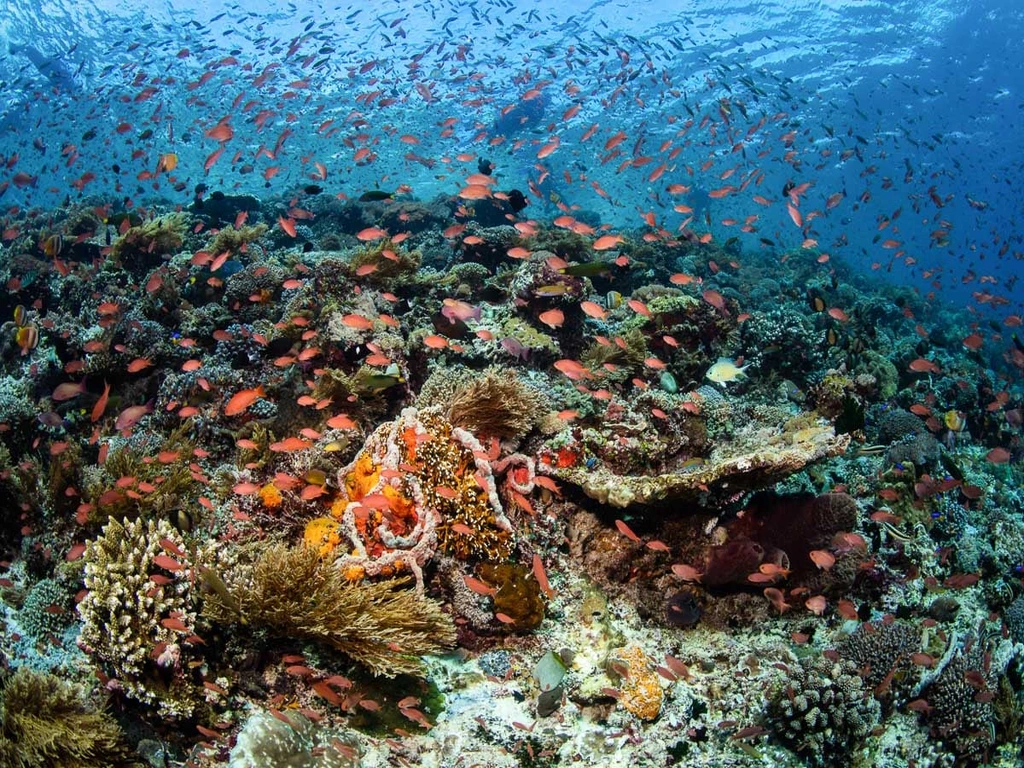
Crystal Rock is one of those Komodo dive sites that doesn’t ease you in. It hits you immediately. You descend into blue water, and within seconds the ocean starts to feel… busy. Fish appear in layers, currents start to move around the reef, and suddenly you realize you’re not just diving a reef—you’re inside a living system that never stops moving.
Located in northern Komodo National Park, Crystal Rock sits on a submerged pinnacle that rises from deep water. Because it’s exposed to open ocean currents, it attracts some of the highest concentrations of marine life in the region. This is why experienced divers often call it one of the most “alive” dives in Indonesia.
A Dive That Starts Calm… Then Changes Everything
The entry usually feels peaceful. Blue water, good visibility, and a slow descent toward the reef. But Crystal Rock rarely stays calm for long. As you approach the pinnacle, the current begins to shape the dive. Schools of fusiliers appear first, moving like shifting clouds. Then barracudas hang motionless in the flow. After that, the sharks arrive—patrolling the edges of the reef like they own the space.
And in between all of this, the reef itself is fully active, covered in coral and constantly surrounded by movement. It’s not a place where you “look for marine life.” It’s a place where you choose what to focus on.
Why Crystal Rock Feels Different
What makes Crystal Rock stand out is not just the amount of marine life, but how it behaves. Everything is influenced by current. Fish don’t just swim—they position, rotate, and hunt with the flow. Sharks don’t rush in—they circle, observe, and disappear again into blue water. Even divers feel part of that movement.
One moment you’re hovering calmly over coral. The next, the water picks up and you’re drifting along the reef like you’re being carried through a scene that keeps changing every few meters. That unpredictability is exactly why divers return here. No two dives feel the same.
Conditions That Demand Respect
Crystal Rock is not a beginner dive site. Currents can shift quickly, sometimes easing into a gentle drift and other times accelerating without much warning. Good buoyancy control and comfort in current are essential. Most dives are done as drift dives along the reef edge, with guides positioning divers in safe zones where marine life is most active.
Because of the conditions, many divers prepare for sites like this through a diving course in Komodo before attempting more advanced northern dives. It’s not about difficulty for the sake of it—it’s about being able to enjoy the site safely when it’s at its best.
Crystal Rock is often combined with nearby sites like Castle Rock, creating a full day of high-energy diving in northern Komodo. These sites are tide-dependent, which means timing matters. When conditions line up, it becomes one of the most exciting dive circuits in the region. Many divers experience it as part of a fun diving trip in Komodo, especially when exploring multiple drift-heavy sites in one day.
Crystal Rock doesn’t fade into memory easily. It stays with you in fragments: sharks in the blue, a sudden burst of fish, the feeling of current shifting under you, and that constant sense that something is always happening just out of frame. It’s not a calm reef dive. It’s a moving system you briefly become part of. And that’s exactly why it’s considered one of Komodo’s signature experiences.
Exploring Crystal Rock from Labuan Bajo
Dives here typically depart from Labuan Bajo via full-day trips or liveaboards heading into northern Komodo. Conditions decide everything—boats go when the ocean allows it, not the other way around. If you want to experience Crystal Rock with local guidance and proper timing, you can plan your trip through Divers Paradise Komodo for guided diving, courses, and Komodo dive experiences.
Dive With Us
Got Questions?
Reach Out and Let’s Dive Into Your Next Adventure!
This website is created by Vic Ranci Digital Marketing
© 2024 Divers Paradise Komodo. All rights reserved.